
Hair Transplant
Introduction
Alright, let’s be honest. Watching your hairline retreat or finding more hair in the shower drain than on your head can be a real confidence-knocker. You start doing the mental gymnastics – “Can they tell?”, “Should I wear a hat?”, “Is that combover really working?”. It’s exhausting! But imagine ditching that worry. Imagine looking in the mirror and seeing… well, more of you.
That’s the promise of modern hair transplants. It’s less about chasing some impossible ideal and more about feeling comfortable and confident in your own skin (and scalp!).
5 Quick Ways a Hair Transplant Can Be a Game-Changer
- Confidence on Tap: Feel good walking into any room, knowing your hair isn’t the first thing you’re worried about.
- Turn Back the Clock: A fuller head of hair naturally makes most people look (and feel!) younger.
- Less Morning Fuss: Spend less time trying to strategically style thinning hair.
- Hairstyle Freedom: Dream haircut you thought was off the table? It might be possible again.
- Your Hair, For Keeps: This isn’t a temporary illusion; it’s transplanting your own growing hair.
The Nuts and Bolts: How Do They Actually Do It?
Hair transplant tech has seriously evolved. Forget the doll-hair plugs of yesteryear. Today’s methods are all about achieving results that look like you were born with it. Here are the main approaches:
FUT (Follicular Unit Transplantation) - Aka "The Strip Method"
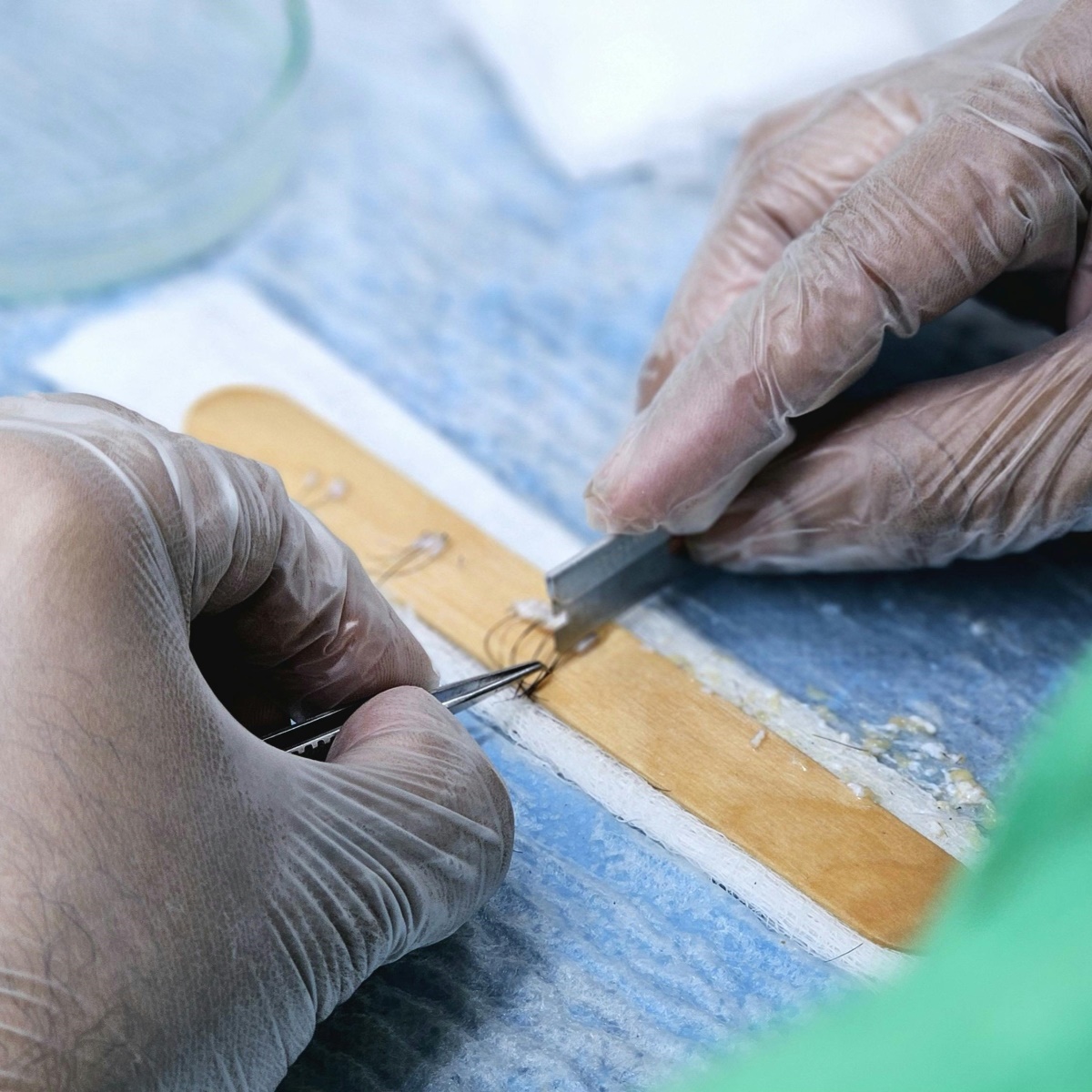
The Gist: The surgeon removes a thin strip of skin packed with healthy hair follicles from the back or sides of your head (where hair is usually thickest – the donor zone). This area is then carefully stitched up. Skilled technicians then meticulously separate the individual follicular units (tiny natural groupings of 1-4 hairs) from this strip under magnification. Finally, tiny slits or holes are made in the thinning/balding area (the recipient zone), and these precious grafts are carefully placed.
What’s New?
Techniques like ‘Trichophytic closure’ help the scar heal flatter and allow some hairs to grow through it, making it much less noticeable.
- The Upside: Allows for a large number of grafts to be harvested in one go, great for extensive hair loss.
Often faster procedure time for large sessions compared to FUE. - Grafts handled this way often have a very high survival rate.
The Downside:
- Leaves a fine, linear scar in the donor area. While usually hidden by hair, it’s visible if you buzz your head very short.
- The donor area needs a bit more healing time and can feel tighter or sorer initially.
- Not the best choice if you love super short fades or crew cuts.
FUE (Follicular Unit Extraction) - Aka "The Individual Approach"
The Gist: No strip needed here! Instead, the surgeon uses a tiny, specialised punch tool (usually less than 1mm wide) to extract individual follicular units directly from the scalp, one by one. These extracted grafts are then implanted into the recipient area, much like with FUT.
What’s New?
Techniques like ‘Trichophytic closure’ help the scar heal flatter and allow some hairs to grow through it, making it much less noticeable.
- Robotic FUE: Robots assist the surgeon in identifying and extracting grafts, aiming for consistency and precision.
- Sapphire FUE: Uses ultra-sharp blades made from sapphire gems (instead of steel) to make the recipient site incisions. This can potentially mean finer channels, less tissue trauma, and quicker healing.
- Micro-Motor FUE: Handheld motorised punches allow for faster and more efficient extraction compared to purely manual FUE.
The Upside:
- No linear scar! Just tiny dot scars scattered throughout the donor area, usually invisible once healed, even with short hair.
- Donor area generally heals faster with less discomfort than FUT.
- Ideal for smaller procedures, hairline refinement, or if you want to keep your hair short.
- Can potentially use body or beard hair as a source if scalp donor hair is limited (though scalp hair is always preferred).
The Downside:
- Extracting grafts individually takes longer, especially for large sessions needing thousands of grafts.
- Often requires shaving a larger area of the donor scalp (sometimes the whole head).
- Graft survival can be slightly more technique-dependent than FUT; requires a highly skilled team.
- Can sometimes be pricier due to the time and meticulous labour involved.
DHI (Direct Hair Implantation) - Aka "The Precision Pen"
The Gist: Often seen as a specific way of doing FUE. Grafts are extracted using the FUE method. The key difference is implantation: grafts are loaded into a special pen-like device (the Choi Implanter Pen). This tool makes the recipient site incision and implants the graft simultaneously. This allows for precise control over the depth, angle, and direction of each implanted hair.
The Upside:
- Offers meticulous control over placement for a natural-looking result.
- Grafts might spend less time outside the body, potentially boosting survival.
- Can sometimes allow for implantation between existing hairs without shaving the recipient area completely (depending on density).
- May achieve high density.
The Downside:
- Very technique-sensitive; requires surgeons and technicians specifically trained in using the Choi pen effectively.
- Can be even more time-consuming than standard FUE, potentially increasing cost.
- Experts debate whether the final results are significantly better than expertly performed traditional FUE using forceps and pre-made incisions.